The documentary follows six couples struggling with infertility who commit to a structured plan to dramatically reduce their exposure to plastics and environmental chemicals in their daily lives. They change how they store food, cook meals, select personal care products, and interact with common household items.
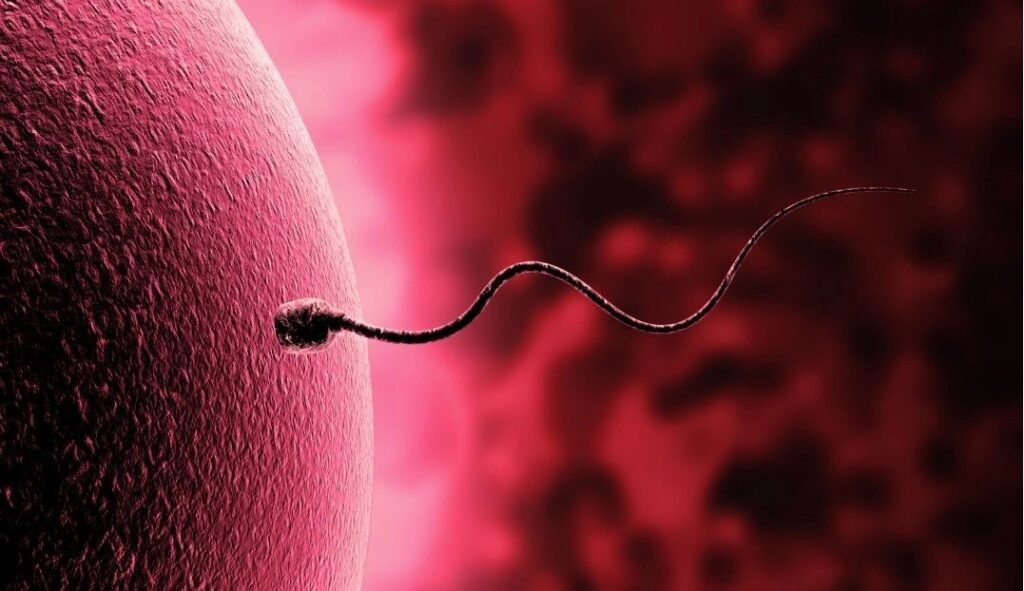
The intervention lasted 90 days, a timeframe that is biologically meaningful. In men, it takes approximately 70–90 days to produce a new generation of sperm, making this window one of the most powerful opportunities to influence fertility outcomes.¹

By the end of the program:
- Three of the six couples became pregnant
- One pregnancy occurred during the experiment
- Others conceived shortly afterward
- Several couples demonstrated measurable improvements in fertility markers
Now, as a physician, I want to be very clear about one important scientific point.
This was not a randomized clinical trial. We cannot say with certainty that reducing plastics alone caused those pregnancies. Fertility is complex, and many factors influence outcomes.
But what we can say—and what I find deeply compelling—is this:
Within just three months, the couples experienced measurable biological changes.
Researchers documented:
- Rapid declines in BPA and phthalate levels
- Improvements in sperm parameters
- Changes in hormone balance
- Reduced inflammatory markers
And that timeline matters enormously.
Because in fertility medicine, three months is the window where preparation becomes possibility.
At the heart of the issue is a biological phenomenon known as Endocrine Disruption.
Certain chemicals found in plastics—such as bisphenol A (BPA), phthalates, and per- and polyfluoroalkyl substances (PFAS)—can mimic or block natural hormones. Hormones are the language of reproduction. When that language becomes distorted, the reproductive system struggles to function optimally.²
- Disrupt ovulation
- Reduce ovarian reserve
- Impair egg quality
- Increase miscarriage risk
- Alter menstrual cycles
- Lower sperm count
- Reduce sperm motility
- Increase DNA fragmentation
- Affect testosterone production
Large epidemiologic and laboratory studies now demonstrate consistent associations between exposure to endocrine-disrupting chemicals and reduced fertility, impaired embryo development, and adverse pregnancy outcomes.³–⁵
Across Canada, the United States, and much of the developed world, fertility rates are declining. We often attribute this to delayed childbearing—and that is certainly part of the story—but environmental exposures are increasingly recognized as another critical factor.
Over the past 50 years, global sperm counts have declined significantly, with environmental toxins—including plastics—identified as major contributors.⁶
This is not about blame.
It is about awareness.
And for couples trying to conceive, awareness creates opportunity.
One of the most hopeful messages from The Plastic Detox is that the body is remarkably resilient.
Studies have shown that when individuals reduce exposure to endocrine-disrupting chemicals—even for a short period—levels of these substances in urine and blood can fall rapidly, sometimes within days to weeks.⁷
In fertility medicine, we are seeing similar patterns. Couples who make targeted environmental changes often experience improvements in cycle regularity, sperm parameters, and overall reproductive health.
Not overnight.
But steadily.
And sometimes dramatically.
One of the most important lessons from this documentary is that fertility is not determined on the day you try to conceive. It is shaped in the months beforehand.
This is why I often tell my patients:
Think of the three months before conception as the most important trimester of pregnancy.
During this period:
- Eggs complete their final maturation
- Sperm are produced from start to finish
- Hormonal signals are stabilized
- The uterine environment is prepared
Small changes made during this time can have outsized effects.
And the encouraging message from this documentary—and from decades of reproductive science—is that improvement can happen faster than we once believed.
You do not need to eliminate every plastic item from your life. That would be unrealistic. But small, consistent changes can significantly reduce exposure.
Here are the strategies I recommend most often in clinical practice:
Switch food storage to glass or stainless steel
Especially for hot foods and liquids
Avoid heating food in plastic
Heat accelerates chemical leaching
Filter your drinking water
Choose fragrance-free personal care products
Limit canned foods
Wash new clothing before wearing
These steps are simple.
They are achievable.
And they are powerful.
If you are trying to conceive…
If you are planning a pregnancy…
If you have experienced infertility or miscarriage…
If you simply want to protect your future fertility…
Watch The Plastic Detox.
Because fertility is not just a medical issue.
It is an environmental issue.
A societal issue.
And ultimately, a generational issue.
Over the years, I have become increasingly concerned about the growing body of evidence linking environmental toxins—particularly plastics and endocrine-disrupting chemicals—to declining fertility rates around the world. This concern is not theoretical. It is something I see reflected in clinical practice every day.
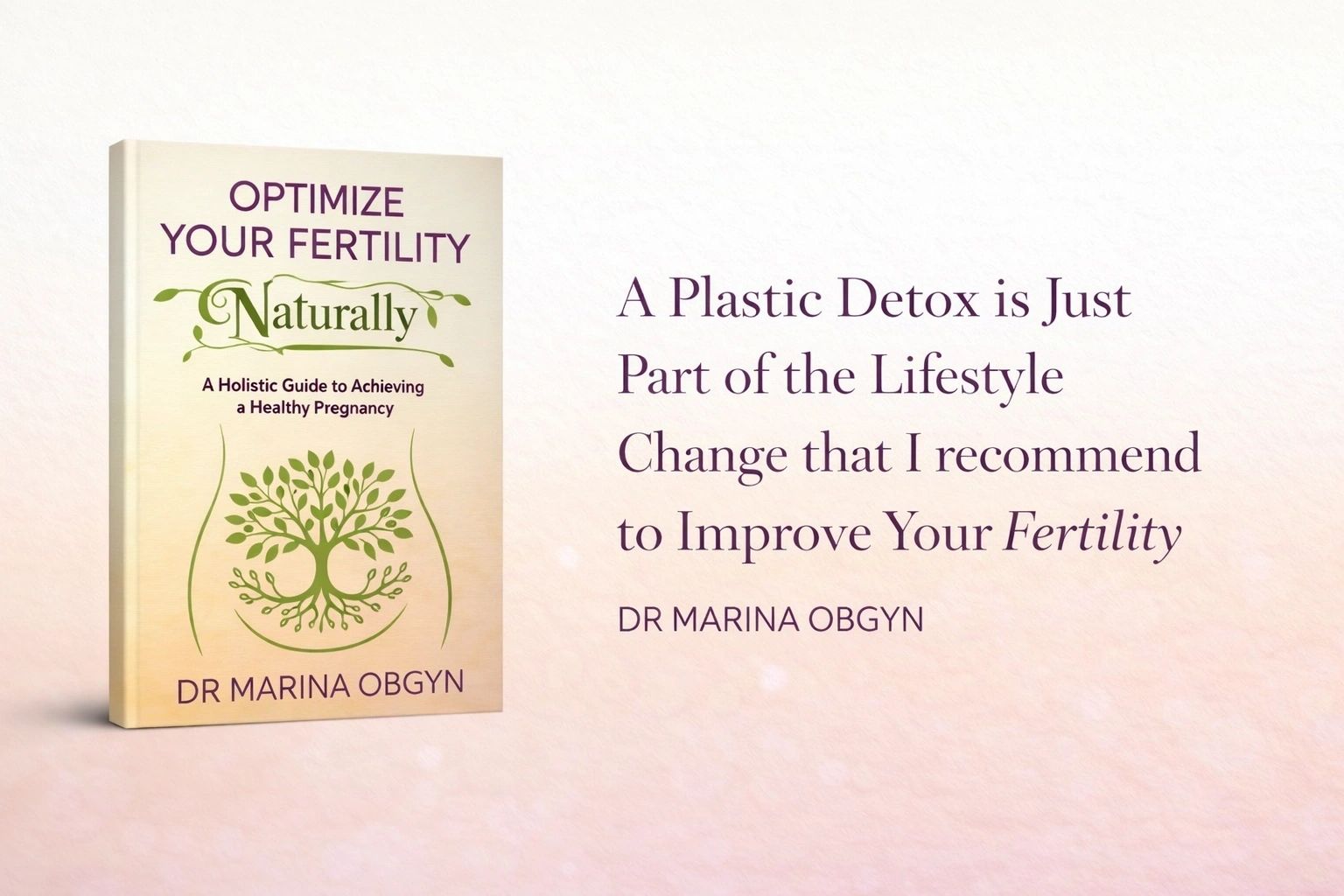
That is why I dedicated an entire chapter to this topic in my book, Optimize Your Fertility Naturally. In that chapter, I explain the science in clear, practical terms and outline realistic steps couples can take to reduce exposure and support reproductive health.
The message I want couples to hear is simple and empowering:
Your fertility is not fixed.
Your environment matters.
And your daily choices can shape your reproductive future.
And the good news is this:
The changes that protect fertility today will also protect the health of the children born tomorrow.
- Amann, R. P. 2008. “The Cycle of the Seminiferous Epithelium in Humans: A Need to Revisit?” Journal of Andrology 29 (5): 469–487. https://doi.org/10.2164/jandrol.107.004655.
- Gore, Andrea C., et al. 2015. “EDC-2: The Endocrine Society’s Second Scientific Statement on Endocrine-Disrupting Chemicals.” Endocrine Reviews 36 (6): E1–E150. https://doi.org/10.1210/er.2015-1010.
- Rochester, Johanna R. 2013. “Bisphenol A and Human Health: A Review of the Literature.” Reproductive Toxicology 42: 132–155. https://doi.org/10.1016/j.reprotox.2013.08.008.
- Meeker, John D., Sheela Sathyanarayana, and Shanna H. Swan. 2009. “Phthalates and Other Additives in Plastics: Human Exposure and Associated Health Outcomes.” Philosophical Transactions of the Royal Society B: Biological Sciences 364 (1526): 2097–2113. https://doi.org/10.1098/rstb.2008.0268.
- Buck Louis, Germaine M., Rajeshwari Sundaram, Richard J. Schisterman, et al. 2013. “Persistent Environmental Pollutants and Couple Fecundity: The LIFE Study.” Environmental Health Perspectives 121 (2): 231–236. https://doi.org/10.1289/ehp.1205301.
- Levine, Hagai, Niels Jørgensen, Anders Mendiola, et al. 2017. “Temporal Trends in Sperm Count: A Systematic Review and Meta-Regression Analysis.” Human Reproduction Update 23 (6): 646–659. https://doi.org/10.1093/humupd/dmx022.
- Harley, Kim G., Asa Bradman, Katherine Chevrier, et al. 2013. “Association between Maternal Urinary Phthalate Metabolites and Adverse Birth Outcomes and Child Development.” Environmental Health Perspectives 121 (2): 257–263. https://doi.org/10.1289/ehp.1205506.
- The Plastic Detox. 2024. Documentary. Distributed by Netflix.
Being healthy takes work!
Dr Marina OBGYN