Why Biological Age, Not Birthday Age, Is Becoming the New Compass in Reproductive Health
For decades, we’ve relied on chronological age as the single most important predictor of fertility. While age certainly matters, new research shows it’s far from the whole story. Today, scientists can measure biological aging in reproductive tissues—ovaries, sperm, and even embryos—opening a more personalized, empowering, and hopeful chapter in fertility care.
These “fertility aging clocks” reveal what many of us in clinical practice have long observed: two women of the same age can have dramatically different ovarian potential, and men of the same age can have profoundly different sperm outcomes. Biological age captures what chronological age cannot.
Let’s explore what this means for women, men, and future families.

Chronological age is simple: it’s the number of birthdays we’ve celebrated.
Biological age is far more interesting: it reflects how cells are functioning, repairing, and responding to stress.
Reproductive tissues are uniquely sensitive to:
- inflammation
- oxidative stress
- sleep quality
- metabolic health
- endocrine-disrupting chemicals
- nutritional status
- mitochondrial efficiency
These influences shape the “pace” of reproductive aging—often decades before infertility becomes obvious. Biological aging clocks can detect these patterns early, allowing women and couples to intervene sooner.
For years, AMH has been considered the best snapshot of ovarian reserve. But exciting new research has shown that ovarian biological aging involves a broader network of molecular markers, including:
- DNA methylation patterns
- granulosa cell senescence
- telomere length
- mitochondrial health
- metabolic signaling pathways
Epigenetic clocks designed for reproductive tissues show enormous promise. Hood et al. developed an epigenetic framework suggesting that ovarian aging is measurable, predictable, and linked to modifiable pathways—bringing us closer to individualized “fertility timelines.”¹
Other researchers have expanded this insight, showing that biological aging markers in reproductive organs may better reflect fertility potential than chronological age alone.²
Historically, male age received less attention, but we now know sperm also has a biological age—and it matters.
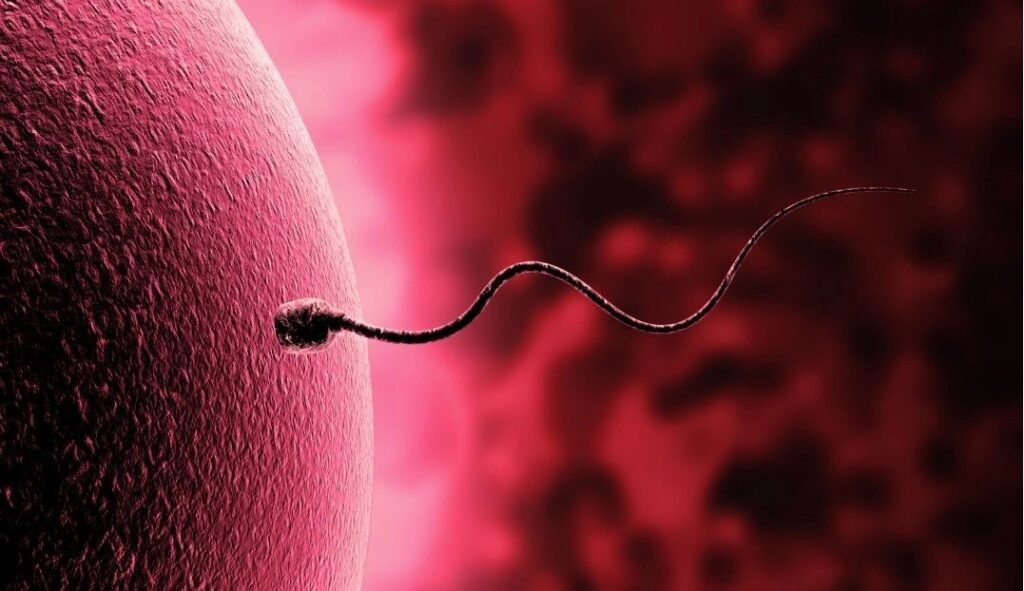
Sperm epigenetic patterns shift with age, inflammation, and metabolic stress. These changes influence early embryo development, placental formation, and miscarriage risk. A landmark population study confirmed that a sperm epigenetic clock predicts pregnancy outcomes independently of the man’s chronological age.³
The encouraging part?
Sperm biological aging is highly responsive to lifestyle and environmental changes. Improvements in sleep, micronutrient intake, exercise, toxin avoidance, and weight reduction can “rejuvenate” sperm in as little as 2–3 months.
One of the most fascinating insights in aging biology comes from embryos themselves. Research shows that early embryos undergo a remarkable rejuvenation event, effectively resetting the biological age of new life before aging begins again.⁴
Understanding these molecular aging patterns may help fertility specialists better personalize stimulation protocols, embryo selection, and implantation strategies in the future.
We are only beginning to understand what these clocks can teach us.
Instead of hearing, “You’re 39, so your chances are low,” patients can focus on what genuinely affects reproductive aging—sleep, stress, inflammation, metabolism, and toxin exposure.
Men are finally included in the conversation, with measurable and actionable biomarkers.
If reproductive aging is measurable, it becomes modifiable.
This is the future of fertility medicine—treatment tailored to each individual’s biological aging process.
These aging clocks reinforce a message at the heart of my practice and my upcoming book: fertility is not separate from health—it is one of its most sensitive indicators.
When we support reproductive longevity, we support whole-body longevity.
We are entering a new era of reproductive medicine—one that is more hopeful, more precise, and finally centered on the full picture of human biology.
- Hood, L., Lovejoy, J., & Price, N. “Integrating Personalized Omics, Systems Biology, and Epigenetic Aging Clocks to Understand Reproductive Aging.” Human Reproduction Update 29, no. 3 (2023): 259–71. https://doi.org/10.1093/humupd/dmac042.
- Li Piani, Letizia, Paola Viganò, and Edgardo Somigliana. “Epigenetic Clocks and Female Fertility Timeline: A New Approach to an Old Issue?” Frontiers in Cell and Developmental Biology 11 (2023): 1121231. https://doi.org/10.3389/fcell.2023.1121231.
- Pilsner, J. Richard, et al. “Sperm Epigenetic Clock Associates with Pregnancy Outcomes in the General Population.” Human Reproduction 37, no. 7 (2022): 1581–93. https://doi.org/10.1093/humrep/deac084.
- Kerepesi, Csaba, et al. “Epigenetic Clocks Reveal a Rejuvenation Event During Embryogenesis Followed by Aging.” Science Advances 7, no. 26 (2021): eabg6082. https://doi.org/10.1126/sciadv.abg6082.
Dr Marina OBGYN