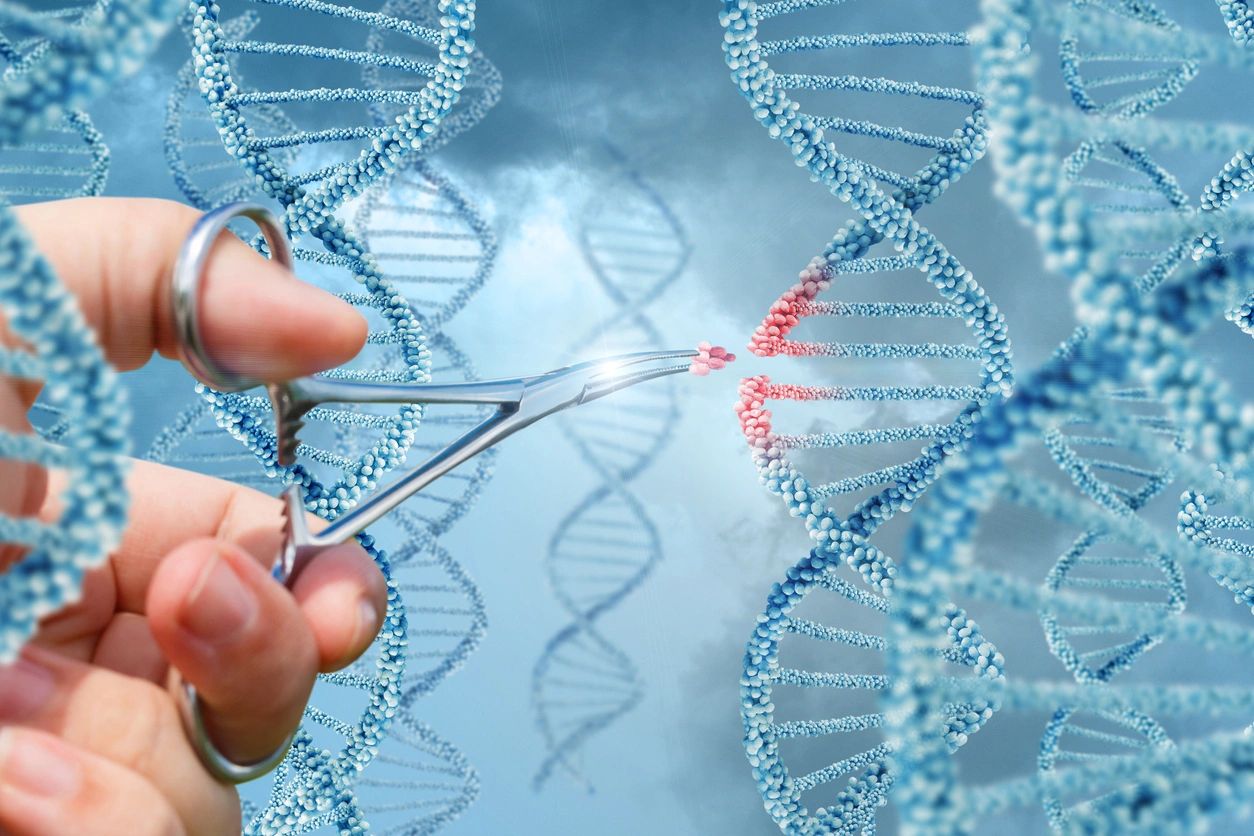
Think of your DNA as a giant cookbook. A GWAS (genome‑wide association study) looks at millions of tiny “spelling differences” in that cookbook across large groups of people. It asks: Which differences show up more often in people with a certain trait, like infertility?
GWAS doesn’t prove cause and effect, but it points us to the genetic neighborhoods most likely involved—so scientists know where to look next.
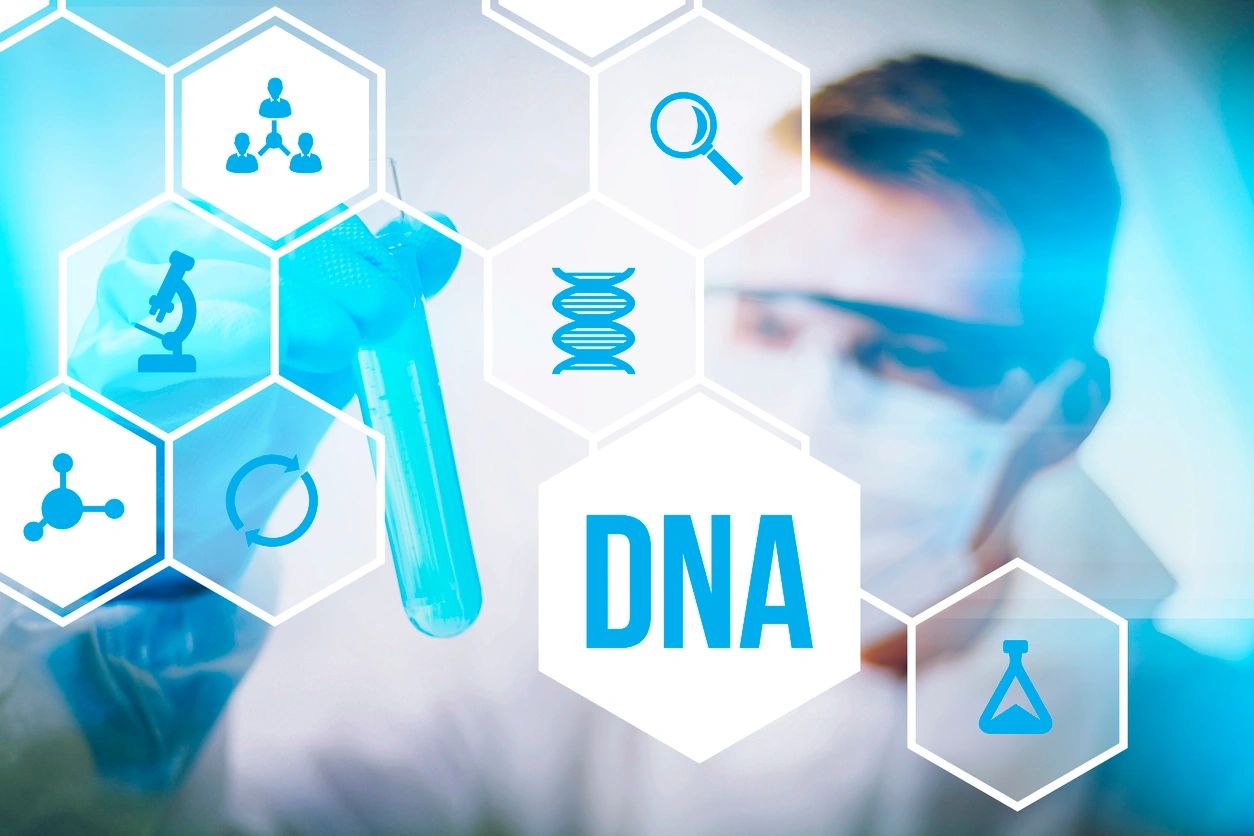
A large 2025 study pulled together data from many study groups and found 25 DNA regions (loci) linked to infertility in both men and women. In total, the analysis included up to 42,629 individuals with infertility and 740,619 controls. The researchers also mapped hundreds of regions tied to reproductive hormones.
Key ideas in plain language:
- It’s not all about weight. The genetic links for female infertility overlapped more with endometriosis and PCOS than with obesity.
- Hormones matter—but the genetics are more complex. The inherited patterns behind “infertility” are not identical to the patterns behind measured hormone levels. Hormones are the weather; genes are the climate—related, but not the same. Blood tests give a moment‑in‑time snapshot, while genetic influences on infertility can act through many pathways that don’t necessarily change FSH, LH, or estradiol, so the genetics of infertility only partly overlaps with the genetics of hormone levels.
- Both common and rare variants play a role. Most GWAS signals are common, small‑effect variants, but some rare, protein‑changing variants also showed meaningful links to risk.
A locus is a neighborhood, not an exact house. GWAS tells us where to look; lab work (fine‑mapping, gene expression, and functional studies) tells us which gene and how it affects fertility.
- Cleaner data going in. AI helps sort real‑world health records into clearer sub‑types (e.g., anovulatory vs. tubal infertility), so the genetics are less noisy within and across study groups.
- From neighborhood to likely house. Machine‑learning tools combine many clues (distance, chromatin contacts, QTLs) to rank the most likely gene at each GWAS signal—giving labs a short list to test first.
- Predicting which changes matter. Deep‑learning models read raw DNA sequence and estimate whether a variant might change gene activity or splicing—useful when most hits sit outside protein‑coding regions.
- Pinpointing the right cells. By blending GWAS with single‑cell data, AI helps identify which cells (granulosa, theca, Sertoli, Leydig, pituitary) a variant likely acts in—so experiments target the right tissue.
- Careful steps toward risk scores. AI helps build polygenic risk tools that may someday flag who benefits from earlier evaluation or extra preconception support. These aren’t ready for routine infertility triage yet, but they’re improving.
Take‑home: AI doesn’t replace good medicine or lifestyle. It prioritizes where to focus, speeding the path from “statistical signal” to actionable biology.
- Start earlier if you have risks. Family history of endometriosis/PCOS or prior miscarriages? Consider earlier assessment and a proactive plan.
- Double down on fundamentals. Sleep regularity, resistance + aerobic training, steady blood sugar, nutrient sufficiency, stress skills, and minimizing endocrine disruptors—all support the very hormone and inflammatory pathways flagged by genetics.
- Think long‑term. As research moves from loci to specific genes, we’ll see clearer targets for prevention—and better personalization.
There isn’t a single “infertility gene.” This study gives us a clearer map of the pathways that matter. With AI helping to read that map faster and more accurately, we can make smarter choices today—and turn those insights into better tests and treatments tomorrow.
- Venkatesh, Samvida S., Laura B. L. Wittemans, Duncan S. Palmer, Nikolas A. Baya, Teresa Ferreira, et al. “Genome‑wide Analyses Identify 25 Infertility Loci and Relationships with Reproductive Traits across the Allele Frequency Spectrum.” Nature Genetics 57, no. 5 (2025): 1107–1118.
- Uffelmann, Emil, Qin Qin Huang, Nchangwi Syntia Munung, Jantina de Vries, Yukinori Okada, et al. “Genome‑Wide Association Studies.” Nature Reviews Methods Primers 1 (2021): 59.
Dr Marina OBGYN