Small, doable choices that protect hormones, gametes, and our planet
After three decades in exam rooms and operating rooms, I’ve watched the fertility conversation widen—from ovulation charts and semen analyses to something bigger: the environment around our bodies. We’re learning that everyday exposures—especially from plastics and their additives—can “whisper” to our hormones and nudge reproductive biology in the wrong direction. The good news? Many high-impact changes are simple, affordable, and beautifully aligned with sustainability.
- Plastics show up where eggs and sperm live. Recent work has identified microplastics in human follicular fluid (around the egg) and semen. That doesn’t prove causation, but it makes exposure-reduction a commonsense part of preconception care.¹
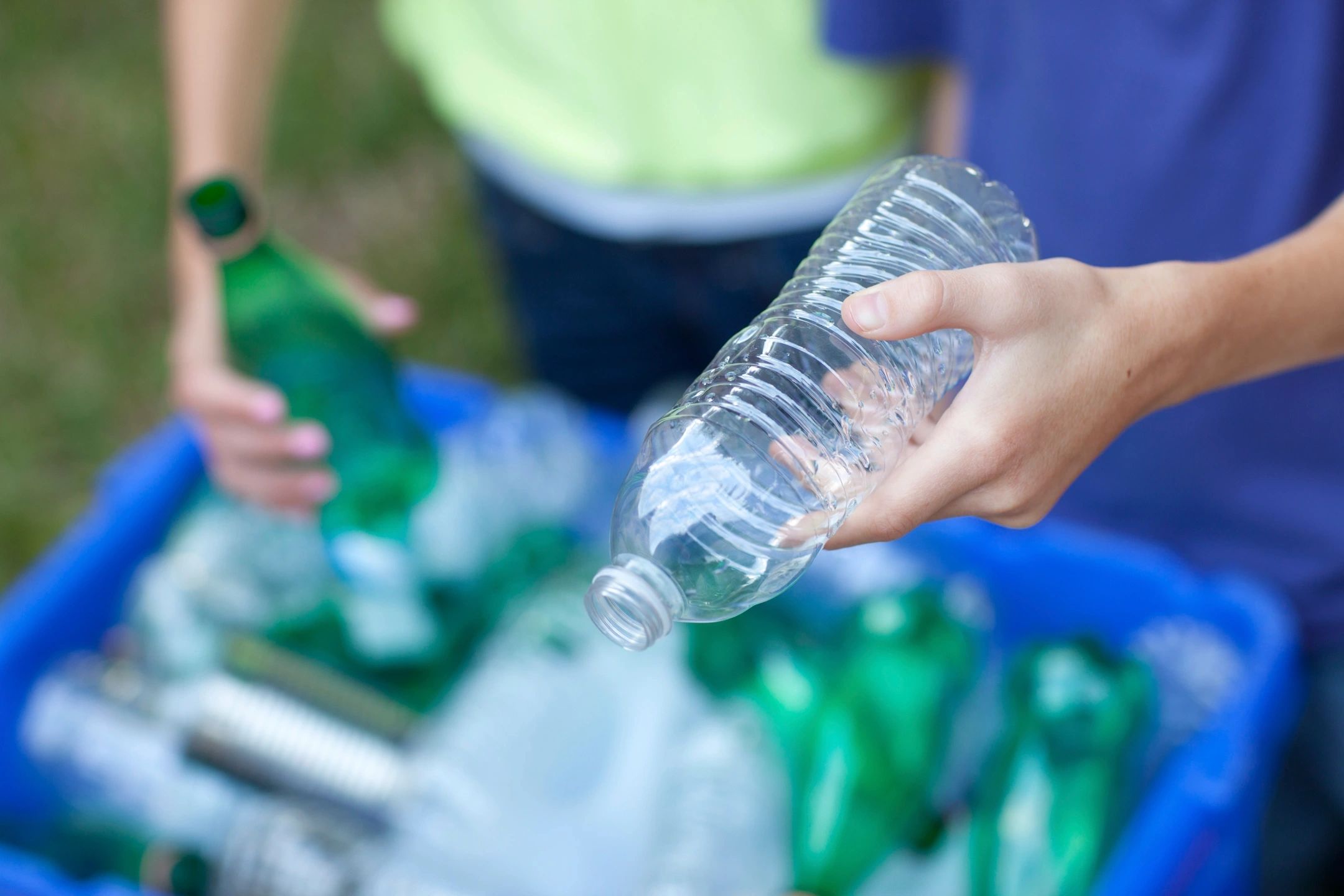
- Bottled water is a major source of tiny particles. New imaging methods found hundreds of thousands of nanoplastic fragments per liter in typical bottled water. Tap water that meets safety standards and is filtered appropriately often carries far fewer particles.²³
- Additives matter, not just the plastic itself. PFAS (“forever chemicals”), phthalates, and bisphenols are endocrine-disrupting chemicals (EDCs) linked to lower fecundability and altered semen parameters in epidemiologic studies and reviews.⁴⁵⁶⁷
- Clinical guidance supports counseling on exposure reduction. ACOG (with ASRM and SMFM) urges clinicians to discuss practical ways to reduce toxic environmental exposures before and during pregnancy—framing it as part of routine care and environmental justice.⁸
None of this is about fear. It’s about informed, doable habits that support physiology while we keep pushing for better policy.
These are the small swaps I recommend most often—high benefit, low hassle.
- Choose tap + filter over plastic bottles. Use a certified carbon block or reverse-osmosis system, especially if PFAS are a concern in your area (look for NSF/ANSI 53 or 58 certifications, and PFAS/PFOA/PFOS claims).⁹
- Stainless or glass bottles for on-the-go. Wash, refill, repeat.
- No microwaving in plastic—ever. Heat accelerates chemical migration. Use glass or ceramic in the microwave; store leftovers in glass (with a silicone or stainless lid if needed).
- Cookware check: Prefer cast iron, stainless steel, or enameled surfaces. If you keep nonstick, treat it gently and replace at the first sign of peeling to limit PFAS-containing coatings.
- Bulk and fresh over heavily packaged foods to reduce contact time with plastics.
- Skip single-use tea bags made of nylon/silk; choose loose leaf with a stainless infuser.
- Go fragrance-free where possible (phthalates hide in “fragrance”).
- Digital receipts over thermal paper (a known source of bisphenols). If you must take one, handle minimally and don’t toss it in recycling.¹⁰¹¹
- Vacuum with a HEPA filter and damp-dust weekly—house dust concentrates plastic particles and flame retardants.
- Ventilate while cooking and open windows when outdoor air is good.
Try this with a partner or friend:
- Week 1: Move beverages to glass/stainless; stop microwaving plastic; set e-receipts at your top three stores.
- Week 2: Swap two nonstick pans for cast iron or stainless; choose loose-leaf tea; add one fermented food daily (yogurt/kefir) to support the gut–hormone axis.
- Fecundability signals: Several studies associate higher blood PFAS levels with reduced chances of clinical pregnancy per cycle.⁵,¹²
- Male factor: Meta-analyses link phthalate biomarkers with poorer semen metrics; BPA reviews suggest adverse hormonal patterns—even if individual sperm endpoints vary.⁶⁷
- Guideline posture: Leading bodies emphasize lifestyle first and risk-reduction counseling. That’s perfectly aligned with these swaps—low risk, potentially high upside, and climate-friendly.⁸
Exposure isn’t evenly distributed. Communities near industrial corridors and families with fewer choices often shoulder more chemical burden. Environmental mindfulness is personal—and also public health. Use your voice: ask local officials about PFAS testing, support refill stations, and celebrate businesses reducing plastic.

Environmental mindfulness is not austerity living. It’s modern fertility care: glass over plastic, heat wisely, filter smartly, clean simply, and choose fewer, cleaner products. These moves support hormones and gametes, shrink waste, and model a future you’d be proud to welcome a child into.
- Gómez-Sánchez, E., et al. “Detection and Characterisation of Microplastics in Human Follicular and Seminal Fluid.” Human Reproduction 40, suppl. 1 (2025). https://academic.oup.com/humrep/article/40/Supplement_1/deaf097.280/8182050. Oxford Academic
- Qian, N., et al. “Rapid Single-Particle Chemical Imaging of Nanoplastics by Stimulated Raman Scattering Microscopy.” Proceedings of the National Academy of Sciences 121, no. 6 (2024). https://www.pnas.org/doi/10.1073/pnas.2300582121. PNAS
- Columbia Mailman School of Public Health. “Bottled Water Can Contain Hundreds of Thousands of Nanoplastics.” News release, January 9, 2024. https://www.publichealth.columbia.edu/news/bottled-water-can-contain-hundreds-thousands-nanoplastics. Mailman School of Public Health
- Cohen, N. J., et al. “Exposure to Perfluoroalkyl Substances and Women’s Fertility: A Prospective Study.” Environmental Research 224 (2023). https://pubmed.ncbi.nlm.nih.gov/36801327/. PubMed
- National Institute of Environmental Health Sciences (NIEHS). “PFAS Exposure Linked to Reduced Fertility in Women.” 2023. https://www.niehs.nih.gov/research/supported/centers/core/spotlight/fertility. NIH NIEHS
- Wang, H., et al. “Do Phthalates and Their Metabolites Cause Poor Semen Quality? A Systematic Review and Meta-Analysis.” Chemosphere 311 (2023). https://pubmed.ncbi.nlm.nih.gov/36504299/. PubMed
- Lü, L., et al. “Bisphenol A Exposure Interferes with Reproductive Health in Adult Males: A Systematic Review.” Frontiers in Endocrinology 15 (2024). https://pmc.ncbi.nlm.nih.gov/articles/PMC11054375/. PMC
- American College of Obstetricians and Gynecologists (ACOG). “Reducing Prenatal Exposure to Toxic Environmental Agents.” Committee Opinion, July 2021. https://www.acog.org/clinical/clinical-guidance/committee-opinion/articles/2021/07/reducing-prenatal-exposure-to-toxic-environmental-agents. See also PubMed record: https://pubmed.ncbi.nlm.nih.gov/34259492/. ACOGPubMed
- U.S. Environmental Protection Agency. “Meaningful and Achievable Steps You Can Take to Reduce Your Risk from PFAS.” November 21, 2024. https://www.epa.gov/pfas/meaningful-and-achievable-steps-you-can-take-reduce-your-risk. US EPA
- Schwartz, A. W., et al. “Bisphenol A in Thermal Paper Receipts: An Opportunity for Evidence-Based Prevention.” Environmental Health Perspectives 120, no. 1 (2012). https://ehp.niehs.nih.gov/1104004. (PDF: https://ehp.niehs.nih.gov/doi/pdf/10.1289/ehp.1104004). Environmental Health Perspectives+1
- European Food Safety Authority (EFSA). “Bisphenol A.” Topic page summarizing the 2023 re-evaluation and new TDI. April 19, 2023. https://www.efsa.europa.eu/en/topics/topic/bisphenol. See EFSA Journal: https://efsa.onlinelibrary.wiley.com/doi/10.2903/j.efsa.2023.6857. European Food Safety AuthorityEFSA Journal
- World Health Organization. Microplastics in Drinking-Water. 2019. https://www.who.int/publications/i/item/9789241516198 (news summary: https://www.who.int/news/item/20-08-2019-microplastics-in-drinking-water). World Health Organization+1
- Thomsen, A. M. L., et al. “Female Exposure to Phthalates and Time to Pregnancy: A First Pregnancy Planner Study.” Human Reproduction 32, no. 1 (2017): 232–244. https://academic.oup.com/humrep/article/32/1/232/2527533. Oxford Academic
Dr Marina OBGYN