
Mother’s Day can be one of the most beautiful days of the year — and also one of the most painful.
For many women, it is a day filled with flowers, family gatherings, handmade cards, phone calls, and joyful celebration. But for others, it is a quiet reminder of longing, loss, grief, uncertainty, or dreams that have not yet come true.
As an obstetrician-gynecologist who has cared for women for more than 35 years, I have seen both sides of Mother’s Day.
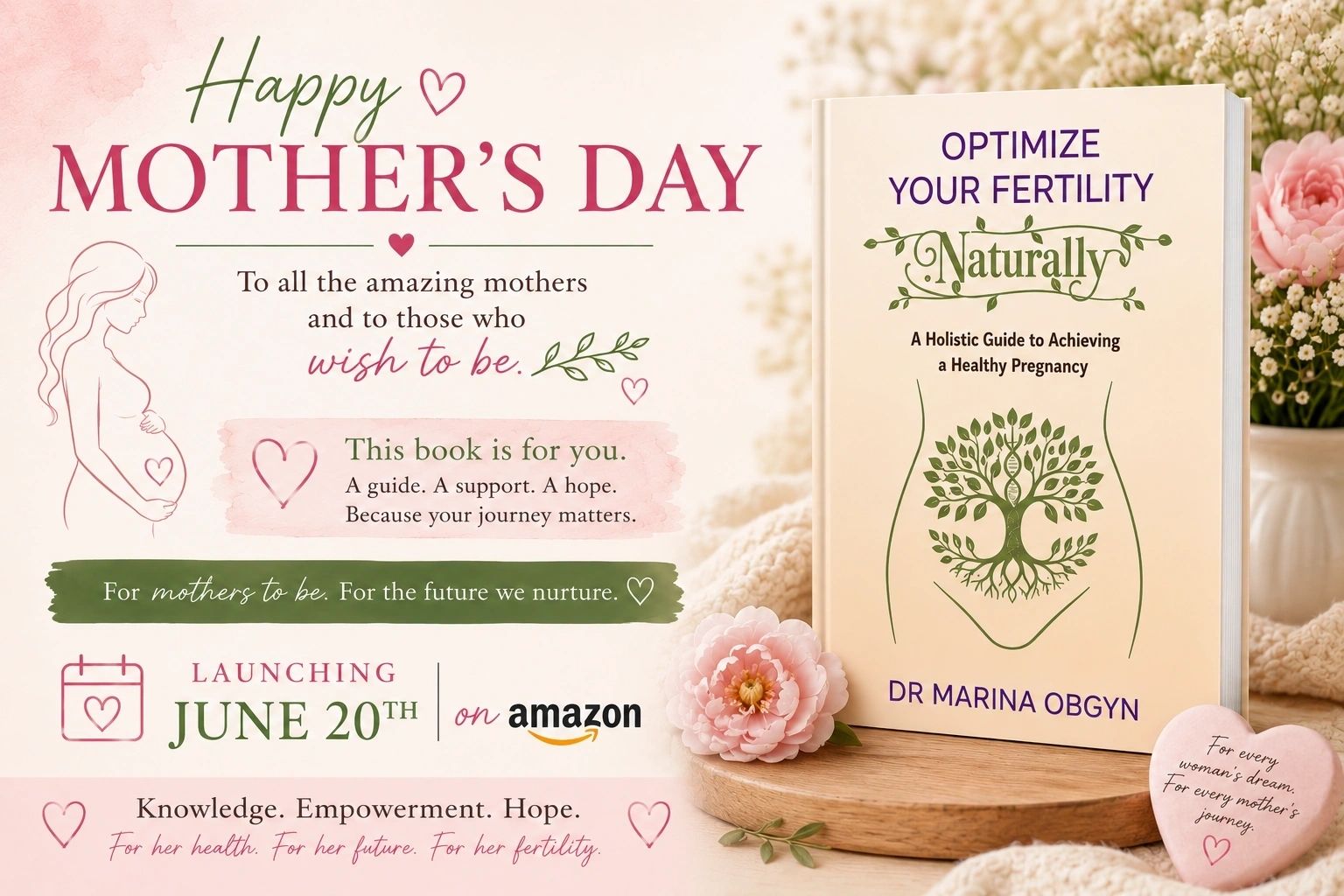
I have celebrated with women who waited years to finally hold a baby in their arms. I have also sat with women in tears after another failed IVF cycle, another miscarriage, another negative pregnancy test, or another month of hoping.
And I think it is important to acknowledge that on Mother’s Day, many emotions can coexist at the same time.
Joy and grief.
Hope and heartbreak.
Love and longing.
Infertility is often described medically in terms of hormones, ovulation, sperm counts, ovarian reserve, or embryo quality. But emotionally, infertility reaches far deeper than any laboratory result.
It can affect identity.
Relationships.
Self-esteem.
Mental health.
Friendships.
Marriages.
Family gatherings.
And even how someone experiences holidays like Mother’s Day.
Many women silently carry the weight of wondering:
“Will I ever become a mother?”
“Did I wait too long?”
“Why is this happening?”
“Why does it seem so easy for everyone else?”
These are deeply human questions.
One of the most difficult parts of infertility is that it is often invisible. People may not know the injections, procedures, losses, financial strain, sleepless nights, or emotional exhaustion happening behind the scenes. Social media can make this even harder, presenting carefully curated images of pregnancy announcements and happy family moments while hiding the complexity that often exists beneath the surface.
And yet, despite the pain infertility can bring, I have also witnessed extraordinary resilience.
I have seen women continue to hope after devastating loss.
I have seen couples grow stronger through adversity.
I have seen patients transform their health, advocate for themselves, and discover strengths they never knew they possessed.
I have also seen how important compassion is.
Sometimes what someone struggling with infertility needs most is not advice.
Not statistics.
Not toxic positivity.
Sometimes they simply need acknowledgment.
To hear:
“I see your pain.”
“You are not alone.”
“Your worth is not defined by your fertility.”
“This is hard.”
Mother’s Day can also be complicated for women who have experienced miscarriage, stillbirth, pregnancy loss, failed fertility treatments, or estrangement from children or parents. Grief does not always have a visible place in celebrations, but it exists quietly for many people.
And for healthcare providers, Mother’s Day can bring reflection as well.
Over the years, I have delivered babies, shared joyful news, and celebrated growing families. But I have also learned that the deepest responsibility in medicine is not only to treat disease — it is to care for people compassionately through uncertainty and vulnerability.
That includes recognizing that fertility is not simply about reproduction. Fertility is deeply connected to overall health — metabolic health, inflammation, sleep, stress, environmental exposures, nutrition, and emotional wellbeing. Increasingly, we are recognizing that reproductive health often reflects broader health patterns within the body.
This understanding gives us both responsibility and hope.
Hope that we can educate earlier.
Hope that we can support fertility proactively.
Hope that lifestyle, environmental awareness, and restorative approaches may improve outcomes for many patients.
Hope that women and couples can feel more empowered and less alone.
But today, on Mother’s Day, I think the most important message is this:
We should widen our understanding of motherhood.
Motherhood exists not only in biology, but also in love, nurturing, caregiving, mentorship, sacrifice, and compassion. There are women who mother children they did not give birth to. Women who care for aging parents. Women who nurture communities, patients, students, nieces, nephews, friends, and partners. Women who carry maternal love in countless visible and invisible ways.
And there are women still waiting.
Waiting deserves compassion too.
So today, I celebrate mothers.
But I also hold space for those who are grieving, hoping, trying, healing, or uncertain.
If Mother’s Day is painful for you this year, please know that your feelings are valid. You are not failing. You are not alone. And your story is still unfolding.
Sometimes medicine focuses heavily on outcomes.
But life is lived in the middle of the journey.
And every person walking that journey deserves dignity, support, compassion, and hope.
Dr Marina OBGGYN